




1900 - 1940


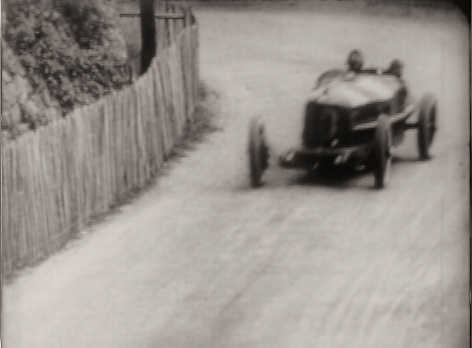
Campari on his way to winning the French GP of Lyon 1924
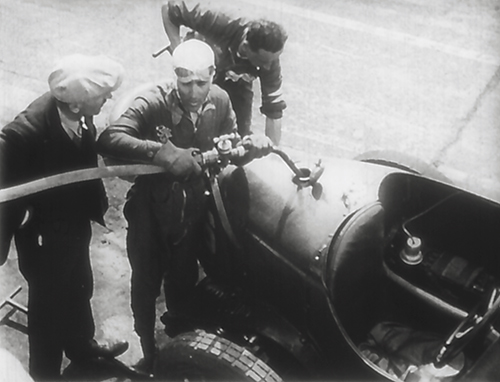
Jano giving Nuvolari instructions during a pit stop at the Italian GP at Monza 1931
Yes, the drivers had to service their own car.
Yes, the drivers had to service their own car.
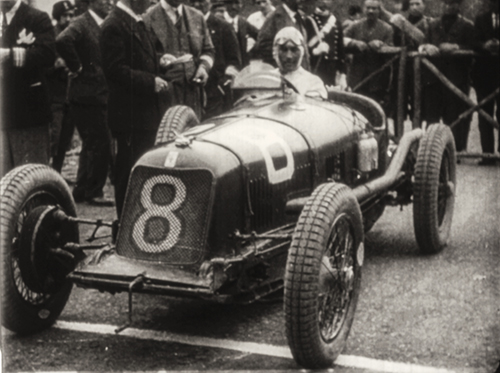
Fagioli awaiting the start of the 1931 Targa Florio in his Maserati 26M
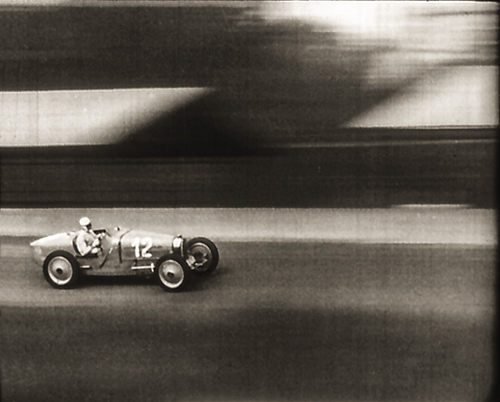
Achille Varzi teamed up with Louis Chiron in the T51 for this ten hour Italian GP at Monza 1931
Read the Reviews by Alain de Cadenet, Pete Vack's full Veloce Today review, and others.
with a dozen amazing new illustrations
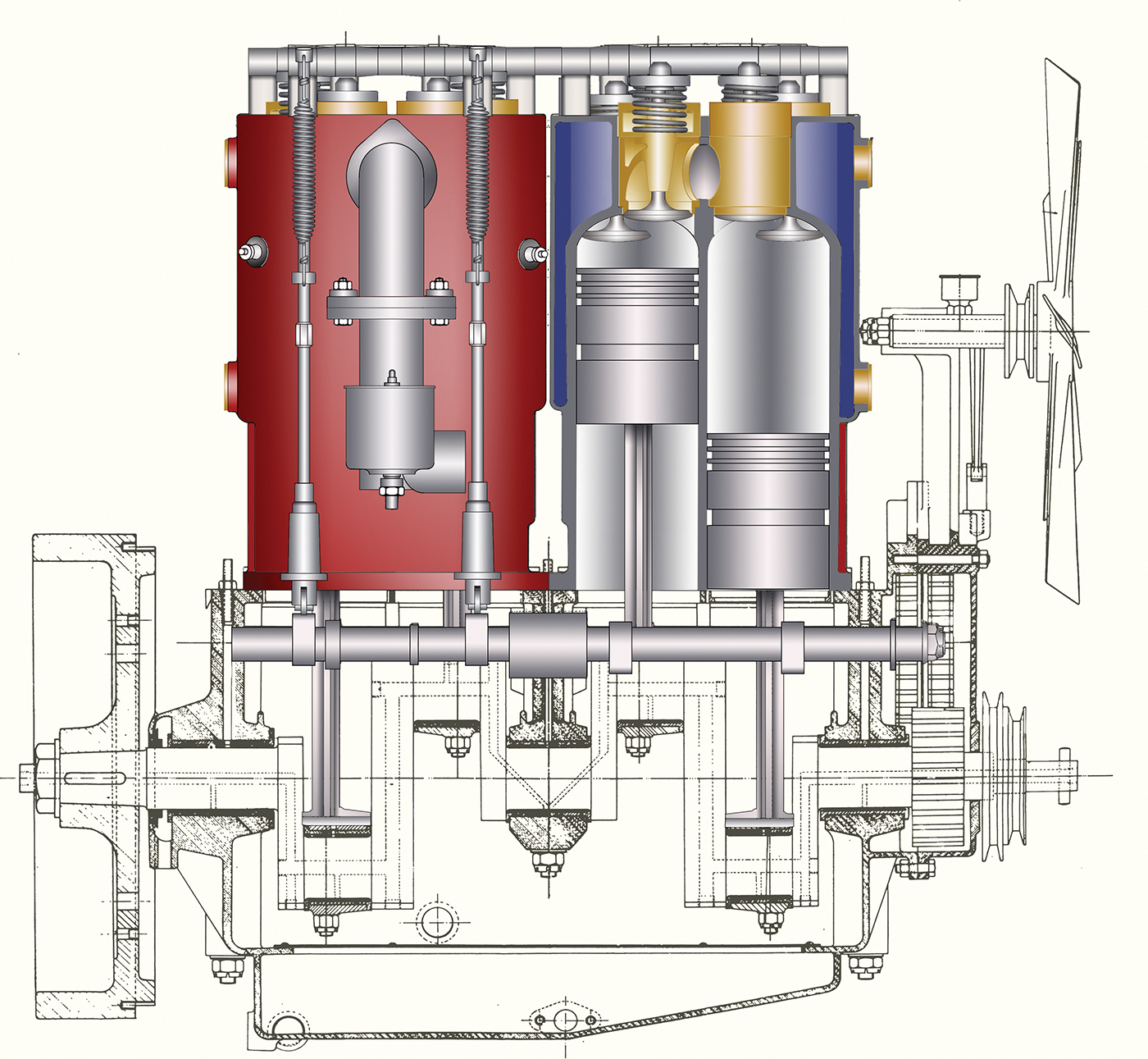
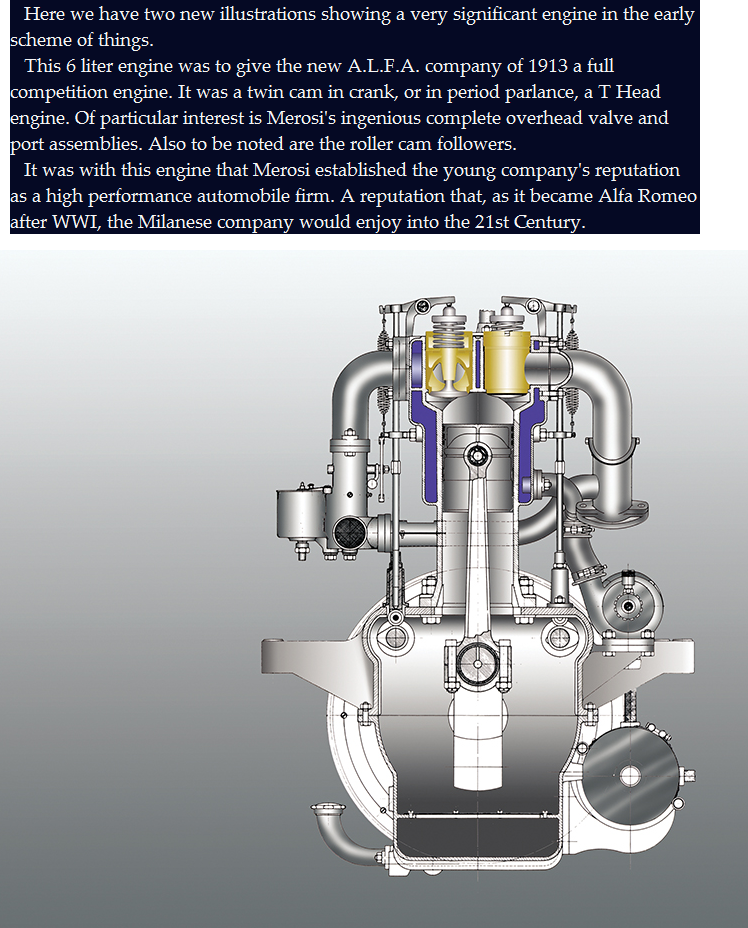


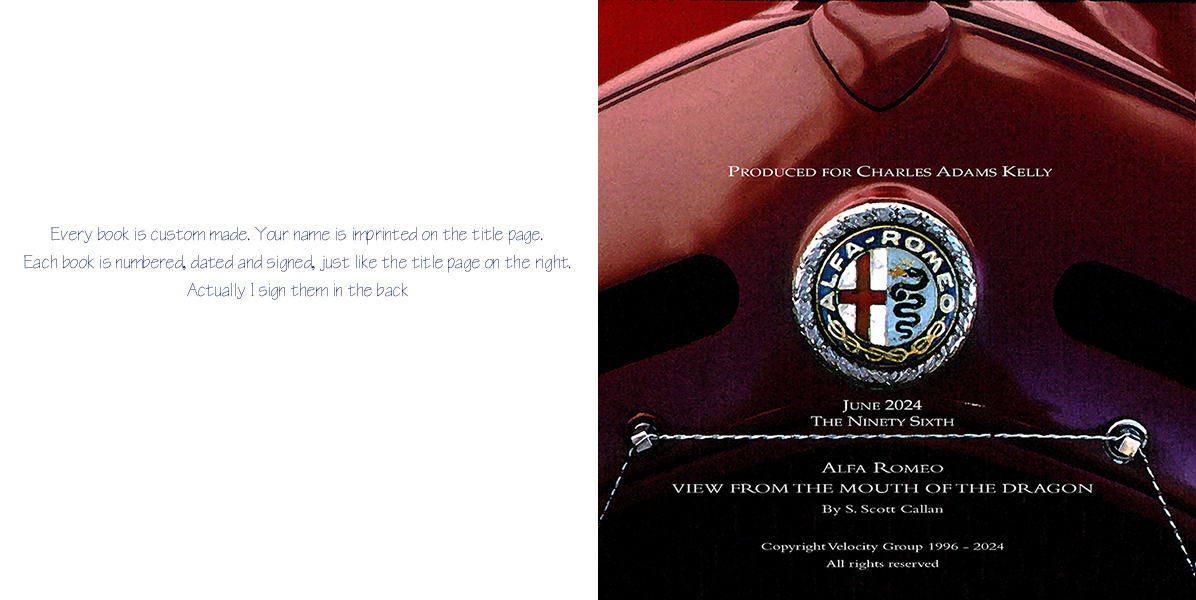
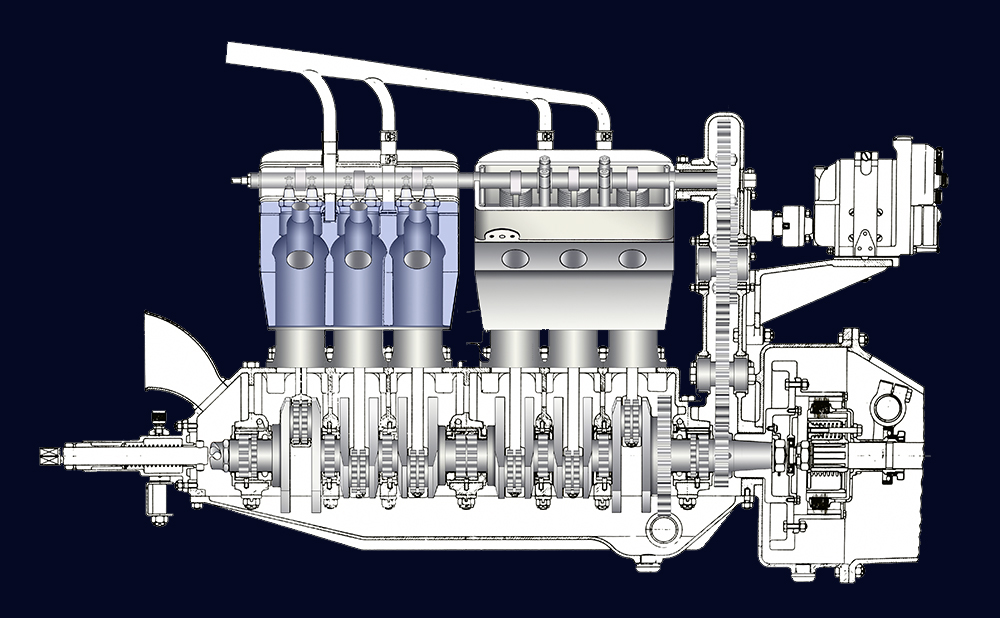
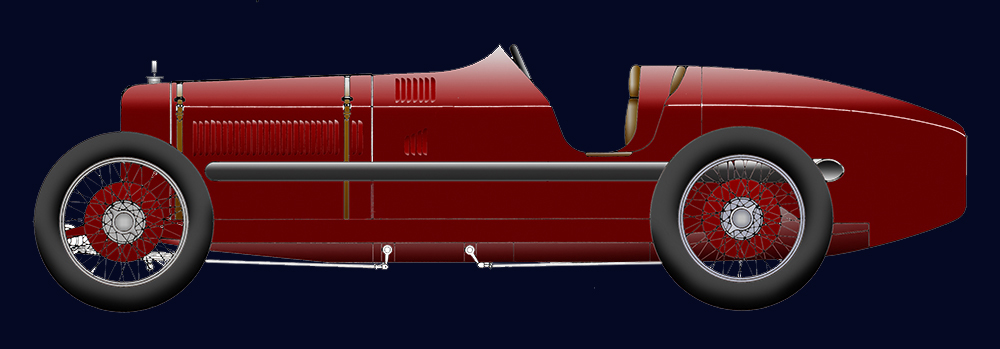
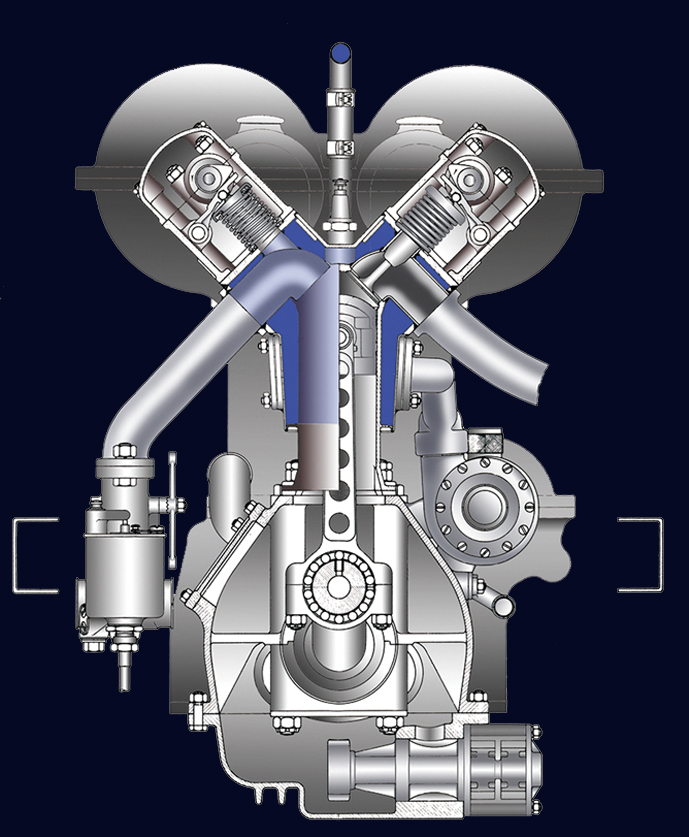
The Alfa book is unique in that it was conceived and art directed to have the graphic look of a book published in the early 1950s, when illustration was the primary design method for visual discussion of automobiles and their engineering. To achieve this 66 new illustrations were created. For this new edition we have increased this number by a dozen. Details such as canting the heads over to the correct valve angle, with all the complexity that implies. Also visiting some illustrations that were not included in the original edition. You can appreciate two of these mentioned elements in the P1 illustrations above.
Let’s begin the visual discussion of the new edition here on the website with the new illustrations of the first Grand Prix car Alfa made after becoming part of the Romeo combine, the Gran Premio Romeo, or P1 of 1923 positioned above as part of the heading. This often overlooked and unloved car was actually state of the art for the 1922 two liter formula, but, just as every other car on the grid at Monza in 1923, it was rendered obsolete by Fiat's 805 with its Roots supercharger. This was a result of the fact that Fiat's development of the supercharging system moved so fast there were no rules put in place differentiating between normally aspirated and supercharged 2 liter engines.
The next image chosen for this visual discussion is a photograph that has been a plot point from the digital publication through the current print editions. This points out how we use photographic compositions to visually spotlight what is in the adjacent text.
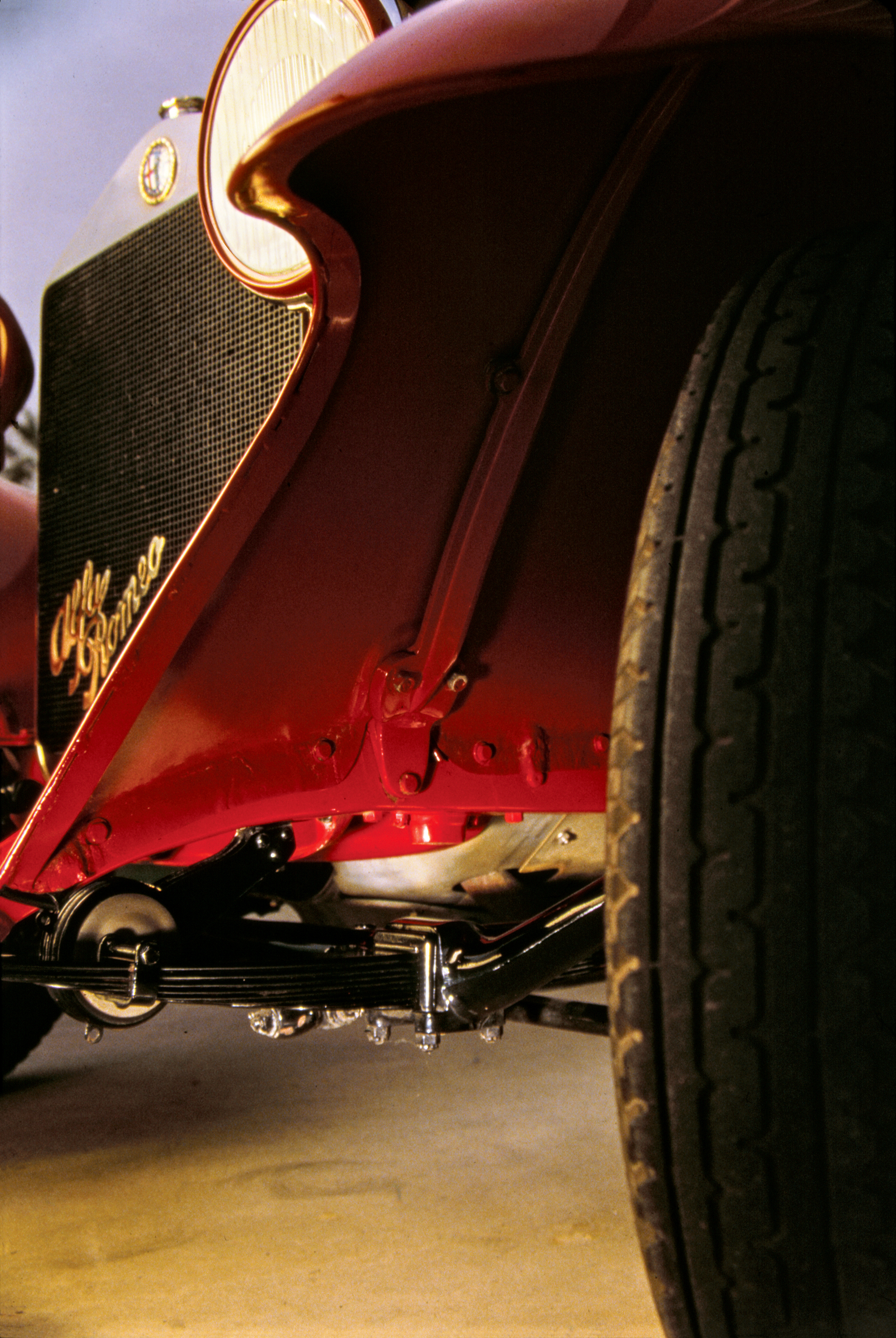
Here we have a special location photograph by John Kent, and art directed by the author. This photo tells the story of how Vittorio Jano and Giuseppe Merosi brought Grand Prix suspension engineering to the new series of road cars for 1927.
Why are we mentioning Jano and Merosi together? Because Giuseppe Merosi was the original director of engineering at A.L.F.A. that established the high performance reputation of the company that would become Alfa Romeo. After Vitorio Jano came aboard as director of competition, Merosi continued on as director of passenger car development and production bringing all the latest competition engineering to the road cars.
This photo was art directed to illustrate how the new 6C 1500 leaf springs were run through the forged front axle; turning these seemingly independent suspension elements into a single unit. This design had been innovated by Fiat on the 804 GP car, and then emulated by Bugatti for the T35. Both incorporated an alloy tube solid axle. Here, as on the P2, Jano and Merosi went for brute strength and used a forged front axle. This proved instrumental on the P2 and would come to define the competition handling of the new road cars. Cars, because of this design, were incredibly sure footed on the very irregular road surfaces of the period.
This photo was also art directed to render with delicate highlight the elegant upsweep of the Zagato fender as it matches Merosi's beautiful graphic design of the Alfa Romeo radiator signature.
John Kent and the author's studio lighting enhance the suspension's hard point where the spring goes through the axle beneath the fender, while an additional lighting kit details the headlight and radiator frame, grill and cross and dragon badge, with an implication of the limitless sky beyond.
This large format photo of the 6C 1500 suspension is located below the live link to the full chapter excerpt.
As the inimitable Alain DeCadent wrote in Alfa Owner magazine. "Add in the politics of Italy and Germany, what was happening at Fiat, Bugatti, Mercedes and others and you have a very different panoply of history to a mere 'marque' book. Definitely scholarship rather than 'coffee table'...."
Let’s begin the visual discussion of the new edition here on the website with the new illustrations of the first Grand Prix car Alfa made after becoming part of the Romeo combine, the Gran Premio Romeo, or P1 of 1923 positioned above as part of the heading. This often overlooked and unloved car was actually state of the art for the 1922 two liter formula, but, just as every other car on the grid at Monza in 1923, it was rendered obsolete by Fiat's 805 with its Roots supercharger. This was a result of the fact that Fiat's development of the supercharging system moved so fast there were no rules put in place differentiating between normally aspirated and supercharged 2 liter engines.
The next image chosen for this visual discussion is a photograph that has been a plot point from the digital publication through the current print editions. This points out how we use photographic compositions to visually spotlight what is in the adjacent text.
Here we have a special location photograph by John Kent, and art directed by the author. This photo tells the story of how Vittorio Jano and Giuseppe Merosi brought Grand Prix suspension engineering to the new series of road cars for 1927.
Why are we mentioning Jano and Merosi together? Because Giuseppe Merosi was the original director of engineering at A.L.F.A. that established the high performance reputation of the company that would become Alfa Romeo. After Vitorio Jano came aboard as director of competition, Merosi continued on as director of passenger car development and production bringing all the latest competition engineering to the road cars.
This photo was art directed to illustrate how the new 6C 1500 leaf springs were run through the forged front axle; turning these seemingly independent suspension elements into a single unit. This design had been innovated by Fiat on the 804 GP car, and then emulated by Bugatti for the T35. Both incorporated an alloy tube solid axle. Here, as on the P2, Jano and Merosi went for brute strength and used a forged front axle. This proved instrumental on the P2 and would come to define the competition handling of the new road cars. Cars, because of this design, were incredibly sure footed on the very irregular road surfaces of the period.
This photo was also art directed to render with delicate highlight the elegant upsweep of the Zagato fender as it matches Merosi's beautiful graphic design of the Alfa Romeo radiator signature.
John Kent and the author's studio lighting enhance the suspension's hard point where the spring goes through the axle beneath the fender, while an additional lighting kit details the headlight and radiator frame, grill and cross and dragon badge, with an implication of the limitless sky beyond.
This large format photo of the 6C 1500 suspension is located below the live link to the full chapter excerpt.
As the inimitable Alain DeCadent wrote in Alfa Owner magazine. "Add in the politics of Italy and Germany, what was happening at Fiat, Bugatti, Mercedes and others and you have a very different panoply of history to a mere 'marque' book. Definitely scholarship rather than 'coffee table'...."